Since 2002, the Rural Organisation for Social Education (ROSE) has implemented comprehensive child development programs in rural Tamil Nadu, evolving from early childhood health screening to structured remedial education, child protection systems, adolescent girls' empowerment, and child-focused disaster response interventions.
Our integrated model places children at the center of community transformation by addressing four critical pillars:
Through community participation, structured programming, and rights-based advocacy, ROSE works to ensure that vulnerable children access safe environments, quality education, psychosocial care, and long-term opportunities for dignified development.
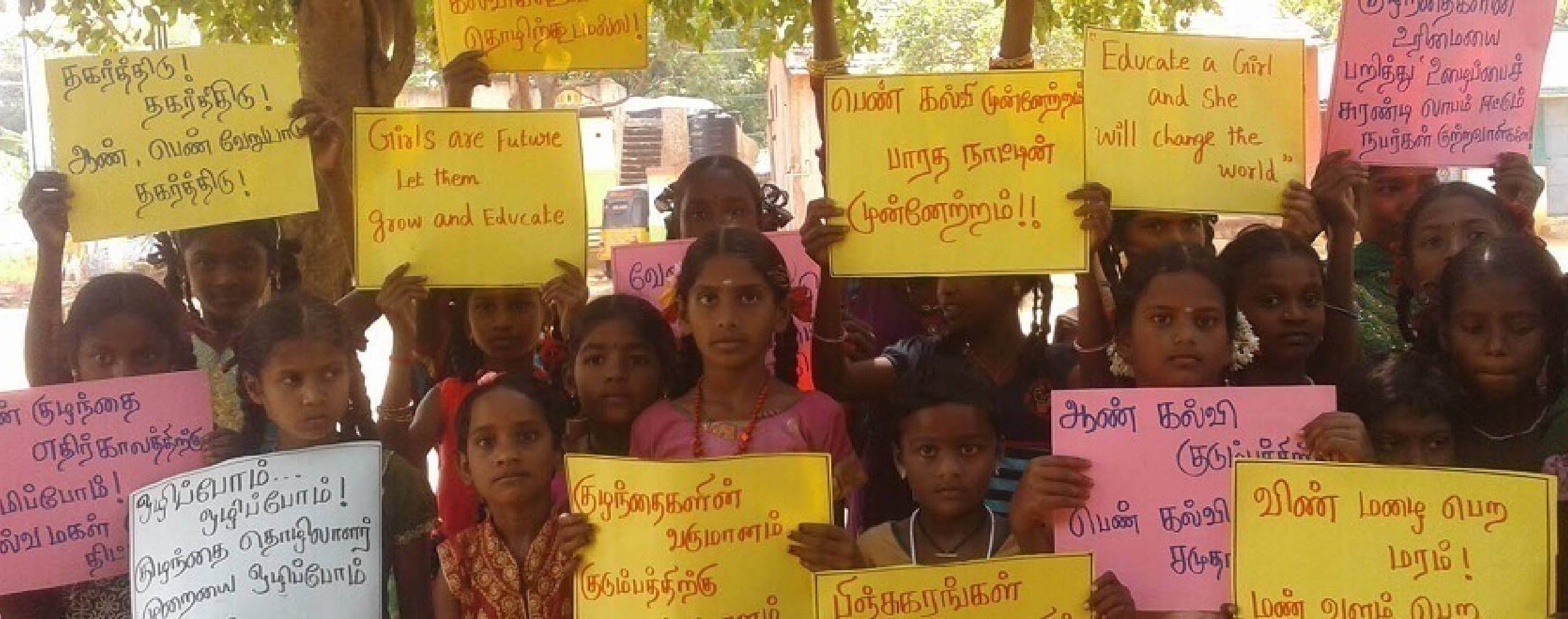
Child protection is foundational to sustainable development. ROSE has actively campaigned against child abuse, institutional violence, child labour, and early marriage since 2004.
ROSE participated in state-level public hearings addressing:
This advocacy strengthened community vigilance and accountability mechanisms.
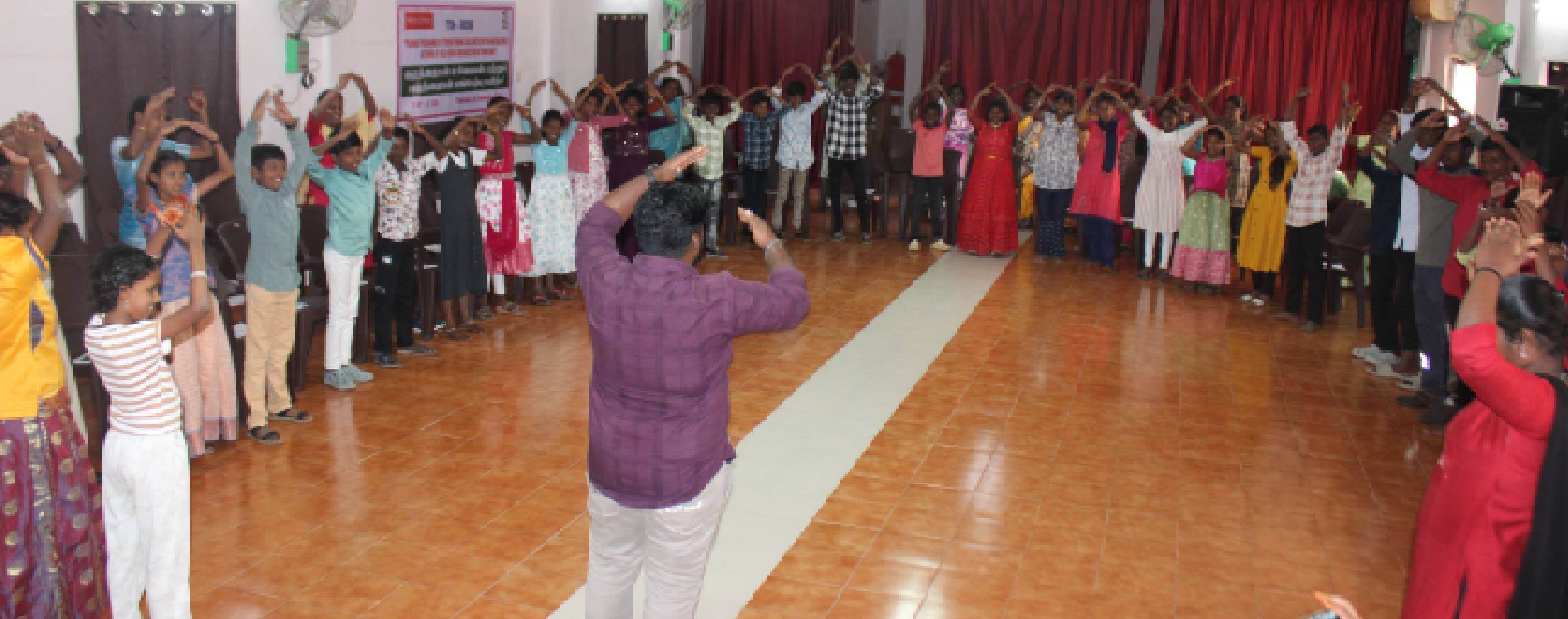
ROSE conducted structured awareness workshops on:
These sessions empowered children with age-appropriate knowledge to recognize and report abuse.
ROSE led campaigns against the exploitative Sumangali Scheme, a system drawing adolescent girls into bonded labour in textile mills.
Key interventions:
This initiative addressed both prevention and rehabilitation.
This represents a significant model of child-led protection advocacy.
ROSE enabled 128 children to participate in Grama Sabha meetings, where they submitted memorandums demanding:
Child participation strengthens democratic engagement and institutional responsiveness.
Post-2004 tsunami, ROSE launched intensive enrollment campaigns across 30 villages to ensure children returned to school and completed elementary education.
Door-to-door mobilization ensured:
Since 2005, ROSE established Children Activity Centres (CACs) to provide:
The model expanded from 5 to 10 centers, benefiting 577 children at its peak.
During COVID-19 lockdowns, three CACs continued serving 117 children to prevent learning loss.
ROSE provided targeted coaching for students who failed 10th and 12th public examinations:
This remedial strategy prevents long-term educational exclusion.
ROSE established:
Early childhood care improves cognitive development, school readiness, and long-term educational outcomes.
ROSE conducted:
Healthy children learn better; integrating health screening with education strengthens retention and performance.
ROSE supported girls to access higher education by providing:
Access to tertiary education is a key pathway out of poverty for rural girls.
ROSE formed:
These programs challenged gender stereotypes and enhanced:
A traditional games festival involving 312 children revived indigenous sports and strengthened social cohesion.
Structured gender education equipped girls to:
This rights-based approach builds long-term resilience and agency.
The "Wave of Life" psychosocial project supported children affected by the tsunami through:
Initially serving 120 children and later expanding to 580 children, this intervention supported trauma recovery and emotional stability.
Children are disproportionately affected by disasters. ROSE integrates child-centered humanitarian response into its core strategy.
Following the tsunami:
The response combined relief, education, and emotional recovery.
ROSE provided:
Infrastructure restoration ensured educational continuity.
During the pandemic:
This prevented severe learning disruption in rural communities.
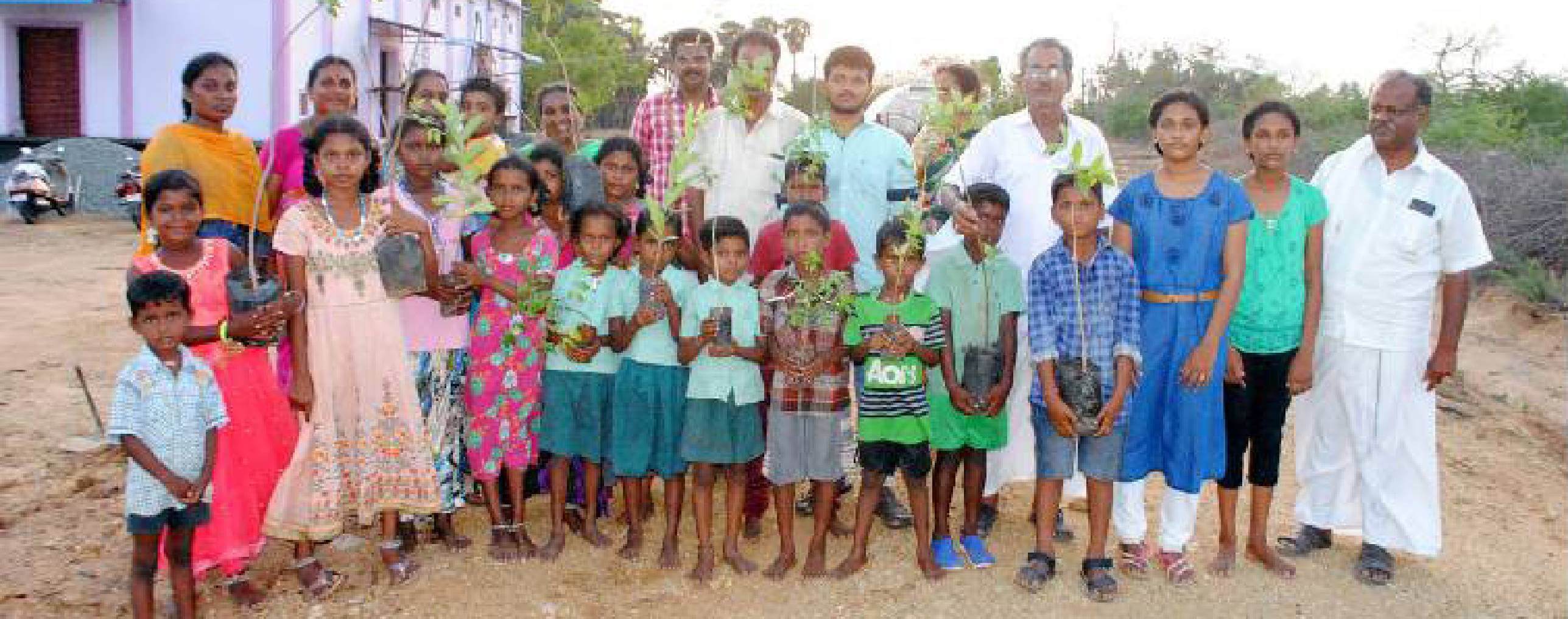
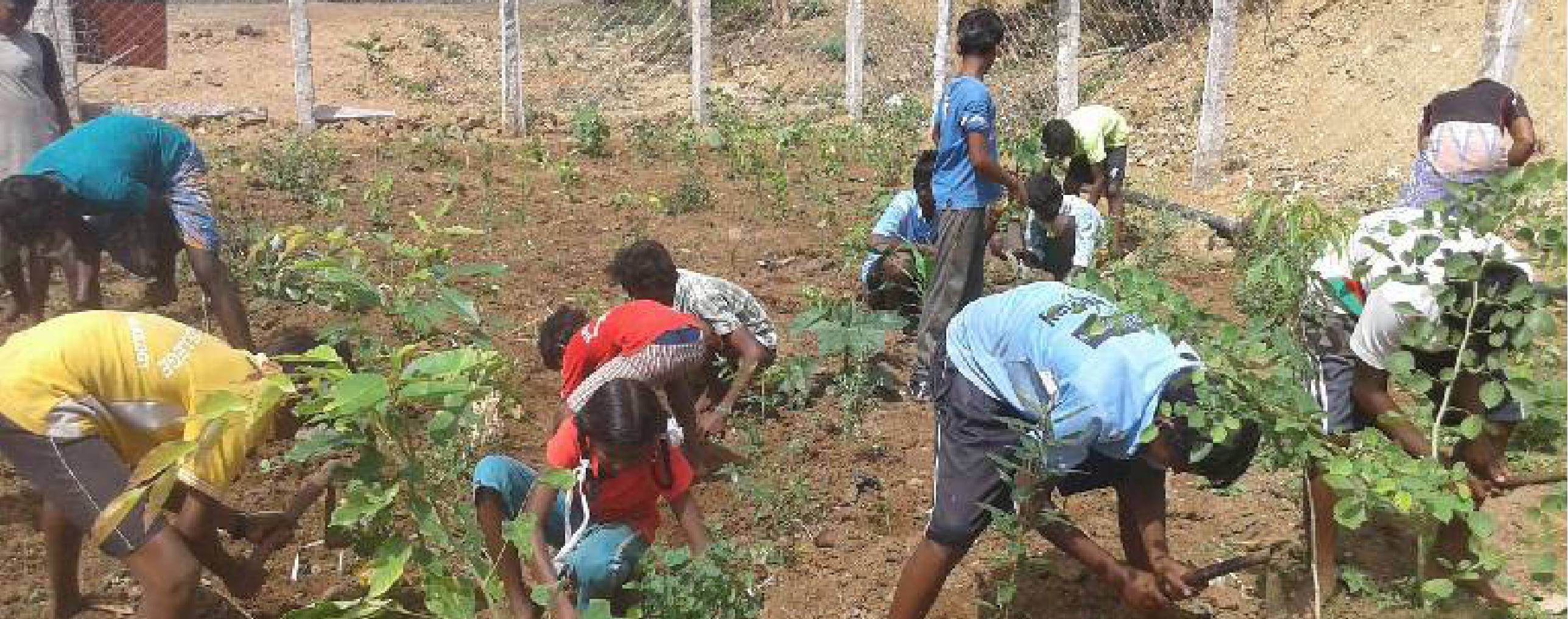
ROSE integrates environmental awareness within child development:
Children learn ecological responsibility alongside civic engagement.
ROSE's child development approach is:
Since 2002, thousands of children across coastal and rural Tamil Nadu have benefited from integrated interventions addressing health, education, protection, empowerment, and ecological responsibility.
Investing in child development produces multi-generational impact:
By addressing foundational learning, protection, and empowerment simultaneously, ROSE contributes to breaking cycles of poverty and social exclusion.
ROSE welcomes partnerships with:
Together, we can strengthen child protection systems, remedial education programs, girl child empowerment initiatives, and disaster response mechanisms in rural India.